A tiny miracle for the littlest hands
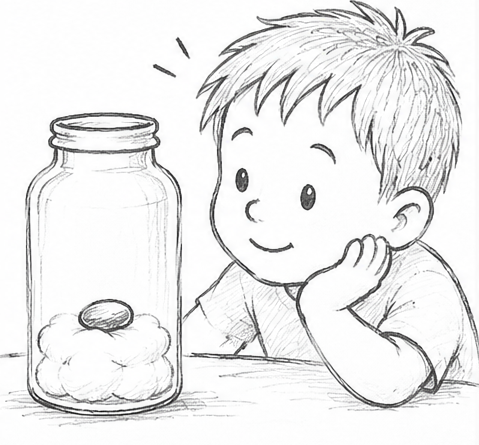
What to do — grow a bean in a jar
You will need: a dried bean (a butter bean or sugar bean is easiest to hold). Not ones used previously for blind baking · a clean glass jar or clear cup · a ball of cotton wool · a little water · a sunny windowsill
- Wet the cotton wool with water until it is damp all through, then press it into the bottom of the jar.
- Tuck the bean in against the side of the jar, so you can see it from the outside, and pop it on the sunny windowsill.
- Every day, check the cotton wool and add a teaspoonful of water or more if it feels dry. If it is very hot, check the cotton wool is damp twice a day. Never let it dry out completely.
- Watch closely — within a few days the bean will crack open and send out a little root, then a shoot reaching up towards the light!
For grandparents to explain
That little dried bean looks like nothing at all — hard, brown, and still. But it is not dead. It is asleep, tucked away inside, waiting for the right moment to wake up.
Think of the bean like a tiny lunchbox with a sleeping baby plant curled up inside. The lunchbox is already packed with food to get the baby plant going — it just needs water to switch everything on.
When the cotton wool goes damp, the bean drinks the water in and begins to swell. That swelling is what cracks the tough outer skin open — the baby plant’s first move. It has no eyes and no idea which way is up, but it knows two simple rules: roots grow down and shoots grow up, towards the light.
For the first few days, the little plant does not need soil at all. It is still living off the food packed into the bean itself, just like a baby living off milk before it is ready for solid food. Only once the first true leaves unfurl and turn green will it need soil, sunlight, and its own food from the air and earth to keep growing.
A warm, sunny windowsill is all it takes — but a warm room and a little daily water is exactly what the bean is waiting for.
A grandparent’s tip: Start two or three beans at once. Children love giving them names, checking on them each morning, and if one does not sprout, there is no disappointment — one of the others surely will.
Watch it wake up. Ask questions. Science lives in curiosity.