
What is Climate Change — and What Can We Do About It?
What is climate change?
The world’s weather patterns are shifting in ways that are no longer following the norms we grew up with. For most of human history, the earth’s climate stayed fairly steady from one generation to the next. Over the last century, though, gases like carbon dioxide and methane — released mainly by burning coal, oil and petrol, and by farming and industry — have built up in the atmosphere and trapped extra heat near the Earth’s surface.. This is often called the “greenhouse effect,” because it works a bit like the glass roof of a greenhouse: heat gets in easily but struggles to get back out. The result is a planet that is, on average, warmer than it used to be.
That extra warmth doesn’t just mean hotter summers. It also disturbs the patterns that used to be predictable — bringing more intense droughts in some places, heavier floods in others, stronger storms, and heatwaves and cold snaps that break records. The extreme weather many of us have noticed over the past year or two — unusual storms, prolonged dry spells, sudden very heavy downpours — fits this bigger pattern. It doesn’t mean every single storm or dry spell is “caused” by climate change, but it does mean these extremes are becoming more frequent and more severe than they once were.
And what about the sea?
The oceans have been quietly absorbing most of the extra heat trapped by these gases — in fact, over 90% of it has gone into the sea rather than the air, which is one reason the air temperature hasn’t risen even faster. But that heat doesn’t just disappear. Warmer seawater expands, which is one of the main reasons sea levels are rising, alongside melting ice from glaciers and the polar ice caps. Warmer oceans also feed more energy into storms, making cyclones and hurricanes more powerful once they form. Along our own coastline, warmer water disturbs fish migration patterns, threatens coral and kelp systems that marine life depends on, and can make harmful algal blooms more common. For those of us inland, it can feel like a distant problem, but a warmer ocean is really the engine room behind many of the extreme weather events we’re now seeing on land.
What about the “mega-drought” people are talking about?
Scientists studying centuries of tree-rings and soil records have found that in the past, some regions have gone through what they call “mega-droughts” — dry spells lasting decades rather than just a few years, far longer than the droughts most of us have lived through. Researchers are now warning that warming temperatures make these prolonged droughts more likely in several parts of the world, including the south-western United States, parts of South America, the Mediterranean, and Australia. The mechanism is fairly simple: warmer air draws more moisture out of soil and plants, so even where rainfall doesn’t drop much, the land dries out faster and stays dry longer. Southern Africa hasn’t been singled out in quite the same way in this research, but our region is no stranger to prolonged dry spells, and the same warming trend that’s driving mega-drought risk elsewhere adds to that vulnerability here too. It’s a sobering reminder of why using water wisely, even in the “green” months, matters more than ever. Already inland at the start of October we are seeing hotter temperatures for longer.
Higher temperatures can mean less snow in areas like the Alps. Higher temperatures also mean glaciers melt faster and with less snow packing on top of them, there will ultimately be less water to feed rivers for human consumptions, agriculture and hydro-electricity and navigation. renewableenergyworld.com. Countries that are dependant on snowfall and lower temperatures in winter to provide summer rainfall are experiencing problems. Already this past summer certain European countries have had severe power, navigation and water issues as a result of issues affecting the major European rivers. logistik-heute.de Water restrictions have been introduced in large areas of Europe and in the Netherlands, besides having to manage the drinking water supply because the salt water is intruding into fresh water. Usually the river levels are higher and the fresh water from the river pushes into the sea but now the water levels in some river are so low that the sea water has been flowing up the rivers affecting fresh water for crops. rijkswaterstaat.nlm
These sites listed are in different European languages but if you open them in Google you should be able to choose and English translation.
We can’t do much about European issues, but we can tread more lightly at home. We can all use water and less electricity more sparingly.
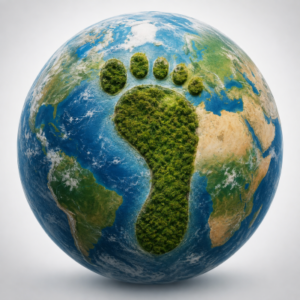
10 practical ways to lighten our footprint
- Switch off lights, appliances and geysers you’re not using — even standby power adds up over a month. Many thousands of people using using standby power adds up to even more fossil fuel burnt with the associated impact.
- The kettle or the geyser tap? Have you noticed how long you stand at the kitchen tap waiting for the hot water to arrive? In many flats the geyser or heat pump is a long way from the tap, and the first ten litres or more run out cold. If all you want is a litre to rinse a few dishes, you’ve wasted far more water than you used, and the hot water left behind in the pipe just goes cold again. For small jobs, boil the kettle instead. It heats only what you need, and you save the water as well as the electricity.
If your building has a communal heat pump, the kettle makes even more sense, because the pipes from the plant to your flat are usually long and the heat lost along the way is greater. If you do run the tap, catch the cold water rather than letting it go down the drain. A jug under the tap will do.
If you are a senior, please don’t hurt yourself trying to manage a heavy bucket. Just collect what you can in a jug and use it for drinking, boiling or cooking. Save the geyser tap for showers and baths, where the hot water is really used. - Keep the mixer tap on cold. If you have a mixer tap with one lever in the middle, it looks so neat and tidy to have the mixer unit aligned dead centre. It is a great waste of money. Look at where the lever on your kitchen or basin tap sits when it’s switched off. Most people leave it in the middle, which means every glass of water, every rinse of the toothbrush and every quick hand wash draws an equal amount of hot and cold water into the pipe. You turn the tap off before the hot water reaches you, so you get no benefit and are not aware of the hot water warming the cold water, but the geyser or heat pump has still done the work and put how water (that you don’t use but pay for) in the pipe. Do that a dozen times a day and it adds up. The fix costs nothing. Push the lever fully to the cold side every time, and only move it across when you really want hot water. It takes a week or two to become a habit, and a small sticker on the cold side helps in the meantime.
- Choose to walk, lift-share, or combine errands into one trip rather than several short drives.
- Grow a few of your own vegetables or herbs, even in pots — it cuts down on packaging and transport.
- Compost your kitchen scraps Have you ever thought about where your potato peels and tea bags end up? In landfill, buried without air, they rot slowly and give off methane, a gas that warms the planet far more than carbon dioxide. If it’s practicable, compost them instead. Take two buckets or boxes with lids, make plenty of ventilation holes on the sides and in the bottoms, and stand them a couple of bricks or old plant pots on a plant pot tray to catch any drips. Holes can be made with a drill, or a sharp nail or old star screw driver and hammer. Put the buckets in a far corner where they are not an eyesore, but are still accessible Put in a small bit of soil or potting soil in the bucket then add your fruit and vegetable scraps, tea bags, coffee grounds and eggshells. Fill one, then start on the other while the first rots down. If the mix looks very wet, it will start to smell, so tear up part of an eggbox finely and mix it in to soak up the moisture before the mix becomes soggy. It is very important to leave out meat, fish, dairy and oil and cooked food, which attract flies and rats. When the mix is dark, crumbly and smells earthy, it’s ready for the garden or pot plants. If you are a senior, choose small, light containers so you don’t strain yourself.
- Buy local and seasonal produce when you can; it travels a shorter distance to reach your plate. Skip out of season foodstuffs that have been flown into the country.
- Mend, reuse or repurpose before replacing — clothing, furniture, containers — rather than buying new.
- Choose reusable shopping bags, containers and water bottles over single-use plastic.
- Plant an indigenous tree or shrub if you have the space — it shades your home, supports birds and insects, and absorbs carbon as it grows. Try growing spekboom (see photo below)— it’s one of the easiest and most effective plants for soaking up carbon, copes with very little water, and will happily grow in a pot on a balcony as well as in open ground, so almost anyone can plant one.
None of these require big lifestyle upheavals — small, steady habits, kept up over time, genuinely add up.

Have you got ideas or comments on the above. Share with us – Ideas, Comments and Contributions Form